By Shannon & ChatGPT
We often think of technology as something we can hold in our hands—a phone, a smart device, a tool engineered for speed or efficiency. But not all technology is physical. Some technologies live in how we relate, how we process emotion, how we structure time, power, and connection. These are non-physical technologies—systems and patterns we create collectively that shape our inner and outer lives just as much as anything made of metal or glass.
Non-physical technology includes the ways we communicate, the emotional cultures we build in relationships, the coping mechanisms we pass down, and even the invisible architecture of attention in a classroom, a family, or a society. These are not objects, but systems. They’re designed—consciously or unconsciously—to produce outcomes. Just like an app or a machine, they can uplift or deplete.
Right now, many of the technologies we create—both physical and non-physical—are built around speed, stimulation, control, and escape. Take the vape pen: a sleek device delivering a quick hit of relief or dopamine. Or the infinite scroll of social media, designed to keep us hooked. These physical tools reflect emotional undercurrents—urgency, anxiety, craving, disconnection. They’re not neutral. They’re built in the image of what we’re prioritizing emotionally and socially.
The same goes for non-physical systems.
A workplace culture that rewards burnout.
A relationship dynamic that relies on sarcasm instead of vulnerability.
A school system that values performance over curiosity.
These are technologies, too.
They are designs, built from values—often fear-based, scarcity-based, or survival-based ones.
The Bridge to the Physical
Non-physical technologies don’t stay invisible.
They eventually become physical.
Our emotional patterns, values, and cultural defaults are the blueprint behind what we invent. Every tool, every app, every machine begins with a mindset. A worldview. A set of invisible assumptions.
So when we build from disconnection, we create tools of distraction.
When we build from fear, we create systems of control.
When we build from scarcity, we create economies of extraction.
But what if we built from something else?
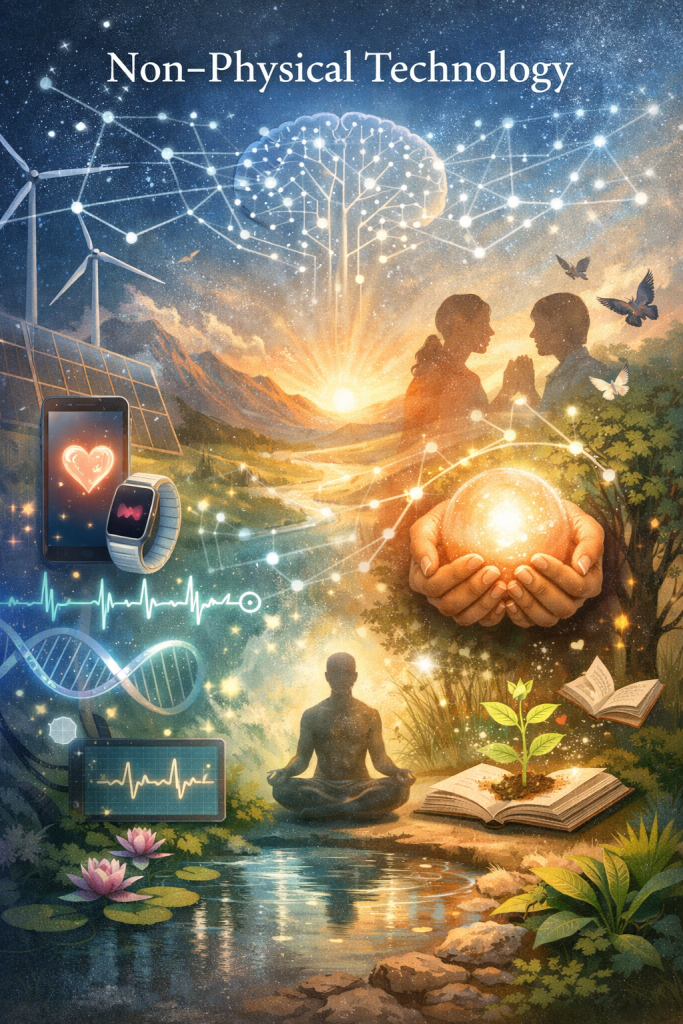
If our non-physical technologies—our emotional norms, relational models, social systems—were rooted in connection, care, presence, and long-term thinking, the physical technologies that followed would look completely different.
We might create:
- Sustainable, regenerative infrastructure aligned with ecosystems
- Deeper forms of medicine that treat the whole person—body, mind, and emotion
- Digital platforms that support nervous system regulation instead of addiction
- Wearables designed to enhance interoception and emotional literacy
- Architectures and public spaces that prioritize restoration, not just efficiency
- Tools for collective healing, not just individual optimization
These inventions wouldn’t be driven by urgency or novelty. They’d emerge from a different rhythm—one attuned to deeper human enrichment.
The physical is always downstream from the emotional.
What We Build Reflects What We Believe
Technology isn’t just about innovation—it’s about intention. Every device, platform, or system we create mirrors the emotional and cultural patterns we’re operating from.
So the question becomes:
What are we coding into our world?
Are we designing from urgency or from care?
From extraction or from regeneration?
From disconnection or from meaningful presence?
We have the capacity to build technologies—both physical and non-physical—that support deeper connection, healing, and aliveness.
But we have to realign the blueprint first.
Because the future we create is only as wise as the systems we’re building it from.
 The Electric Thread
Leave a comment